Signature Luxury Foyer Design: Creating Bespoke Grand Entrance Sanctuaries for Unforgettable First Impressions 2025
Your foyer speaks before you say a word. In luxury real estate markets across 2025, the difference between a $2.3 million home and a $4.7 million property often comes down to one singular moment: the first five seconds after someone steps through your front door. The foyer isn’t just a transitional space; it’s your home’s first impression, your personal brand statement, and the preview of everything that follows. Yet most homeowners treat this critical space as an afterthought, missing the opportunity to create what I call a “grand entrance sanctuary” – a bespoke foyer that doesn’t just welcome guests but transforms their entire perception of your home and lifestyle.
The psychology of arrival: why your foyer is your home’s most valuable real estate
Neuroscientists have proven that human brains form lasting impressions within milliseconds of entering a new space. Your foyer operates as what environmental psychologists call a “threshold experience” – a transitional moment where visitors subconsciously assess your home’s value, your personal taste, and even your social status. This isn’t superficial judgment; it’s hardwired human behavior that dates back thousands of years when quickly assessing new environments meant survival.
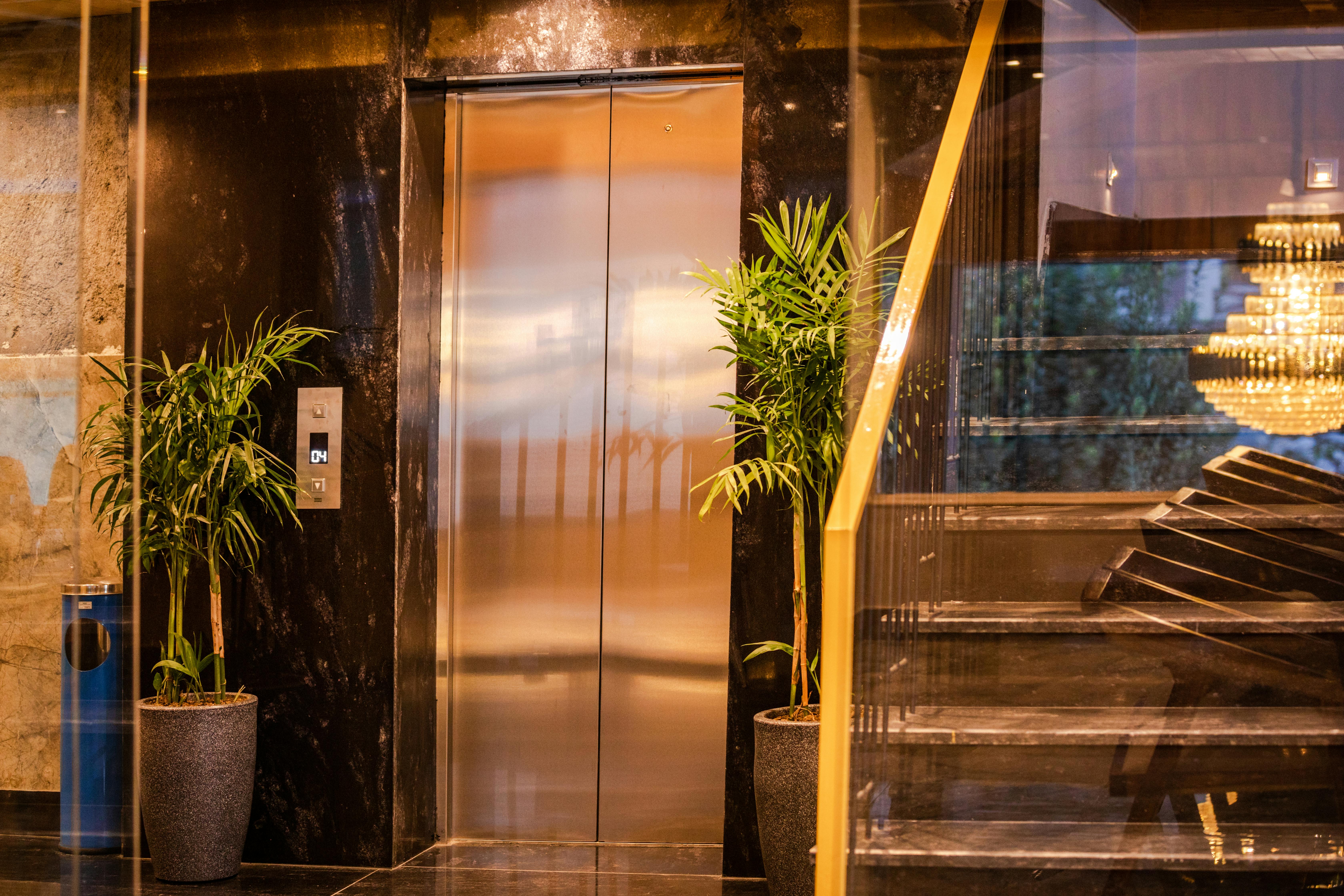
This Photo was taken by SVH Manali.
In 2025’s luxury home market, data from Sotheby’s International Realty reveals that properties with professionally designed foyers sell 23% faster and command 8-12% higher prices compared to homes with standard entryways. The foyer serves as your home’s thesis statement, establishing the design language, quality level, and attention to detail that visitors can expect throughout the rest of your space.
Beyond financial implications, your foyer creates what I term “arrival rituals” – moments of transition that help both you and your guests shift from the outside world into your personal sanctuary. When designed thoughtfully, these spaces provide psychological decompression, allowing the stresses of the day to fade as you cross the threshold into your private domain.
Architectural foundations: building blocks of bespoke foyer grandeur
The most successful luxury foyers begin with three fundamental architectural considerations: spatial proportions, ceiling height, and natural light integration. In my experience designing high-end homes, the golden ratio for foyer sizing suggests allocating 8-12% of your home’s total square footage to the entrance area, though this varies based on your home’s overall layout and architectural style.
Mastering ceiling drama and vertical presence
Ceiling height creates immediate psychological impact. Standard 8-foot ceilings feel constrained in a luxury foyer, while 12-16 foot ceilings provide the grandeur that distinguishes exceptional homes from merely expensive ones. If your existing architecture limits ceiling height, architectural details like coffered designs, tray ceilings, or strategically placed mirrors can create the illusion of greater vertical space.
| Ceiling Height | Psychological Impact | Best Design Applications |
|---|---|---|
| 8-10 feet | Intimate but potentially cramped | Horizontal emphasis, low-profile fixtures |
| 12-14 feet | Elegant and spacious | Statement chandeliers, tall artwork |
| 16+ feet | Grand and impressive | Dramatic installations, two-story elements |
Natural light as your design catalyst
Natural light transforms any foyer from merely functional to genuinely memorable. Skylights, clerestory windows, or sidelights flanking your front door introduce daylight that changes throughout the day, creating a dynamic environment that feels alive and welcoming. When natural light is limited, high-quality LED systems with circadian lighting technology can mimic natural patterns, supporting both aesthetic appeal and biological well-being.
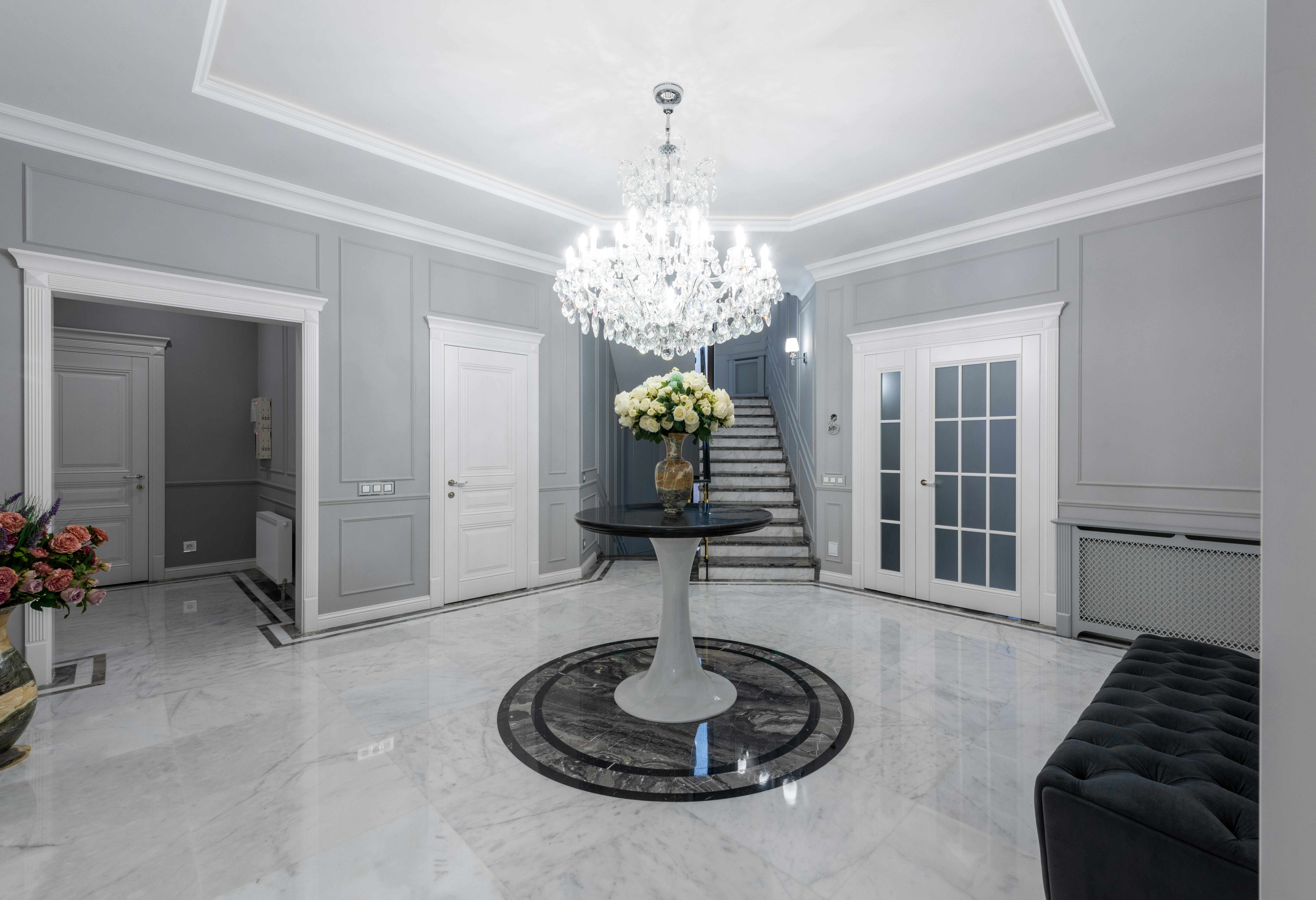
This Photo was taken by Max Vakhtbovych.
Material mastery: selecting surfaces that speak luxury
Material selection in luxury foyer design requires balancing three critical factors: durability, visual impact, and maintenance requirements. Your foyer experiences the highest foot traffic in your home while maintaining the highest aesthetic standards, demanding materials that perform beautifully under constant use.
Flooring foundations that set the stage
Natural stone remains the gold standard for luxury foyer flooring, with marble, travertine, and limestone leading material preferences in 2025. Calacatta marble, with its dramatic veining and timeless appeal, continues dominating high-end installations, though Nero Marquina marble is gaining popularity for its sophisticated contrast potential.
For homeowners seeking alternatives to natural stone, large-format porcelain tiles that mimic natural materials offer similar visual impact with enhanced durability and lower maintenance requirements. The key lies in selecting tiles with realistic texture and variation that doesn’t immediately reveal their manufactured nature.
Hardwood flooring can work beautifully in foyers, particularly when you want to create visual flow between your entrance and adjacent living spaces. However, choose species with high hardness ratings like Brazilian cherry, hickory, or white oak, and always apply commercial-grade finishes to protect against moisture and wear.
Wall treatments that command attention
Your foyer walls provide the canvas for establishing your home’s design personality. Bespoke lighting design works hand-in-hand with wall treatments to create layered visual interest that evolves throughout the day.

This Photo was taken by Ricky Esquivel.
Decorative plaster finishes, particularly Venetian plaster or limewash techniques, add depth and sophistication that paint alone cannot achieve. These materials create subtle texture variations that interact beautifully with both natural and artificial light, generating visual interest that changes throughout the day.
For dramatic impact, consider accent walls using materials like natural stone veneer, reclaimed wood planks, or even custom millwork. The key is selecting one wall as your focal point while keeping adjacent surfaces more neutral to avoid visual competition.
Lighting orchestration: creating theatrical entrance experiences
Lighting in luxury foyer design operates on multiple layers, each serving specific functional and aesthetic purposes. Your lighting scheme should accommodate different scenarios: bright, welcoming illumination for arrivals, softer ambient lighting for evening entertaining, and dramatic accent lighting that highlights architectural features and artwork.
Statement fixtures as sculptural centerpieces
The chandelier or primary light fixture in your foyer functions as functional sculpture, often becoming the space’s most memorable element. Scale matters enormously: your fixture should be proportional to your space without overwhelming it. A general rule suggests chandeliers should measure approximately one-third the width of your foyer’s narrowest dimension.
Crystal chandeliers remain timeless choices, but contemporary options like geometric metal sculptures, organic wood installations, or even custom glass pieces can create equally stunning focal points while reflecting more personal style preferences.

This Photo was taken by Pixabay.
Layered illumination for depth and drama
Beyond your statement fixture, effective foyer lighting incorporates multiple sources: wall sconces for ambient lighting, recessed fixtures for general illumination, and specialty lighting for artwork or architectural features. Smart home technology integration allows you to program different lighting scenes for various occasions and times of day.
According to the Illuminating Engineering Society’s 2025 guidelines, foyer lighting should provide 20-30 foot-candles for general illumination, with accent lighting at 3:1 contrast ratios to effectively highlight featured elements.
Furniture selection: functional elements that enhance grandeur
Foyer furniture serves dual purposes: providing practical storage and surface space while contributing to the overall aesthetic impact. Every piece should feel intentionally selected rather than simply placed for convenience.
Console tables as functional focal points
A well-chosen console table anchors your foyer design while providing essential storage for keys, mail, and other daily necessities. The scale should complement your space: in larger foyers, substantial pieces with drawers or cabinets offer hidden storage, while smaller spaces benefit from sleeker designs that don’t visually crowd the area.
Material selection should complement your overall design scheme. Marble-topped consoles work beautifully with traditional or transitional designs, while sleek metal and glass pieces suit contemporary aesthetics. Wood consoles bridge multiple design styles, particularly when the finish complements your flooring or trim work.
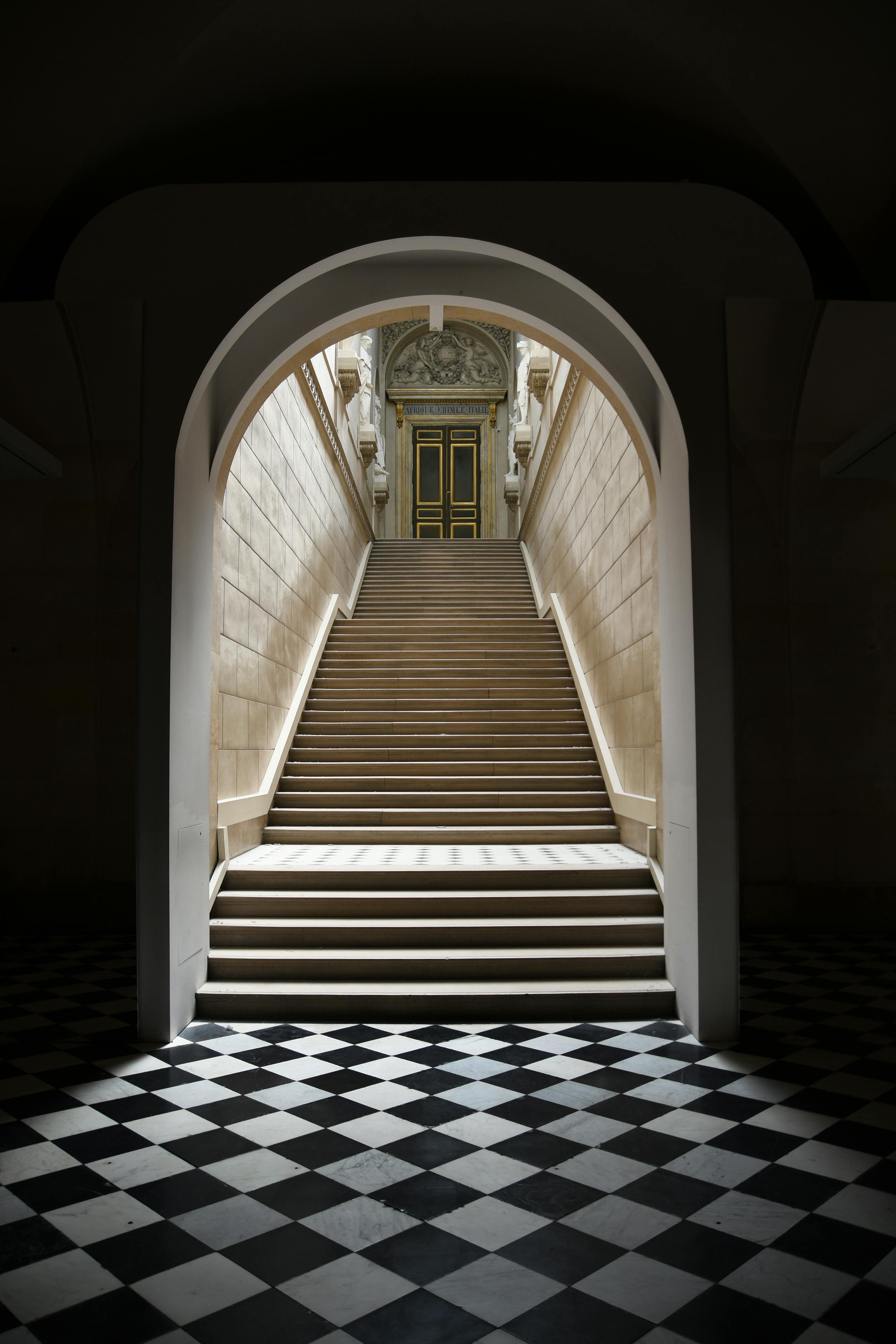
This Photo was taken by Sergio Benitez.
Seating solutions for comfort and style
Foyer seating, when space permits, adds both functionality and luxury. A well-placed bench or pair of chairs provides convenient spots for putting on shoes, waiting for companions, or simply pausing during arrivals. Choose pieces that complement your design aesthetic while offering comfort appropriate for their intended use.
Storage benches prove particularly valuable in foyers, hiding seasonal items, shoe storage, or other necessities while maintaining clean lines. Upholstered options should feature durable, cleanable fabrics that can withstand regular use.
Art and accessories: personalizing your grand entrance
Your foyer provides prime real estate for displaying artwork and accessories that reflect your personal taste and interests. These elements transform a beautiful space into a personal statement, giving guests insight into your personality and style preferences.
Scale and placement for maximum impact
Artwork in foyers can be larger and more dramatic than pieces in other rooms, as the space typically offers unobstructed viewing angles and higher ceilings that accommodate substantial pieces. A single large artwork often creates more impact than multiple smaller pieces, particularly in contemporary settings.
When hanging art above console tables, the bottom edge should sit 6-8 inches above the table surface, with the piece centered both horizontally and vertically within the wall space. For standalone wall installations, hang artwork so the center point sits at eye level, typically 57-60 inches from the floor.

This Photo was taken by Quang Nguyen Vinh.
Creating curated vignettes
Console table styling requires careful curation to avoid cluttered appearances while maintaining visual interest. Start with your largest element, typically a lamp or artwork above the table, then add smaller objects in odd-numbered groupings. Vary heights, textures, and shapes while maintaining a cohesive color palette that complements your overall design scheme.
Fresh flowers or high-quality artificial arrangements add life and fragrance to your foyer, creating sensory experiences that enhance the visual impact. Choose vessels that complement your design aesthetic, whether that’s crystal vases for traditional settings or sleek ceramic pieces for contemporary spaces.
Storage solutions: maintaining pristine aesthetics
Luxury foyers must balance stunning aesthetics with practical storage needs. The most successful designs incorporate storage solutions that remain invisible while keeping everyday necessities organized and accessible.
Hidden storage strategies
Built-in storage offers the most seamless integration, with custom millwork creating coat closets, shoe storage, or even small powder room facilities tucked discretely within the foyer design. When space allows, a dedicated coat closet with interior organization systems keeps outerwear hidden while remaining easily accessible.
Console tables with drawers or cabinets provide concealed storage for keys, sunglasses, mail, and other daily essentials. Choose pieces with soft-close hardware and interior organization systems to maintain the luxury experience even in functional elements.
For homes with limited built-in storage options, attractive baskets, decorative boxes, or furniture pieces with integrated storage maintain organization without compromising aesthetic appeal. The key lies in selecting storage solutions that complement rather than detract from your overall design vision.
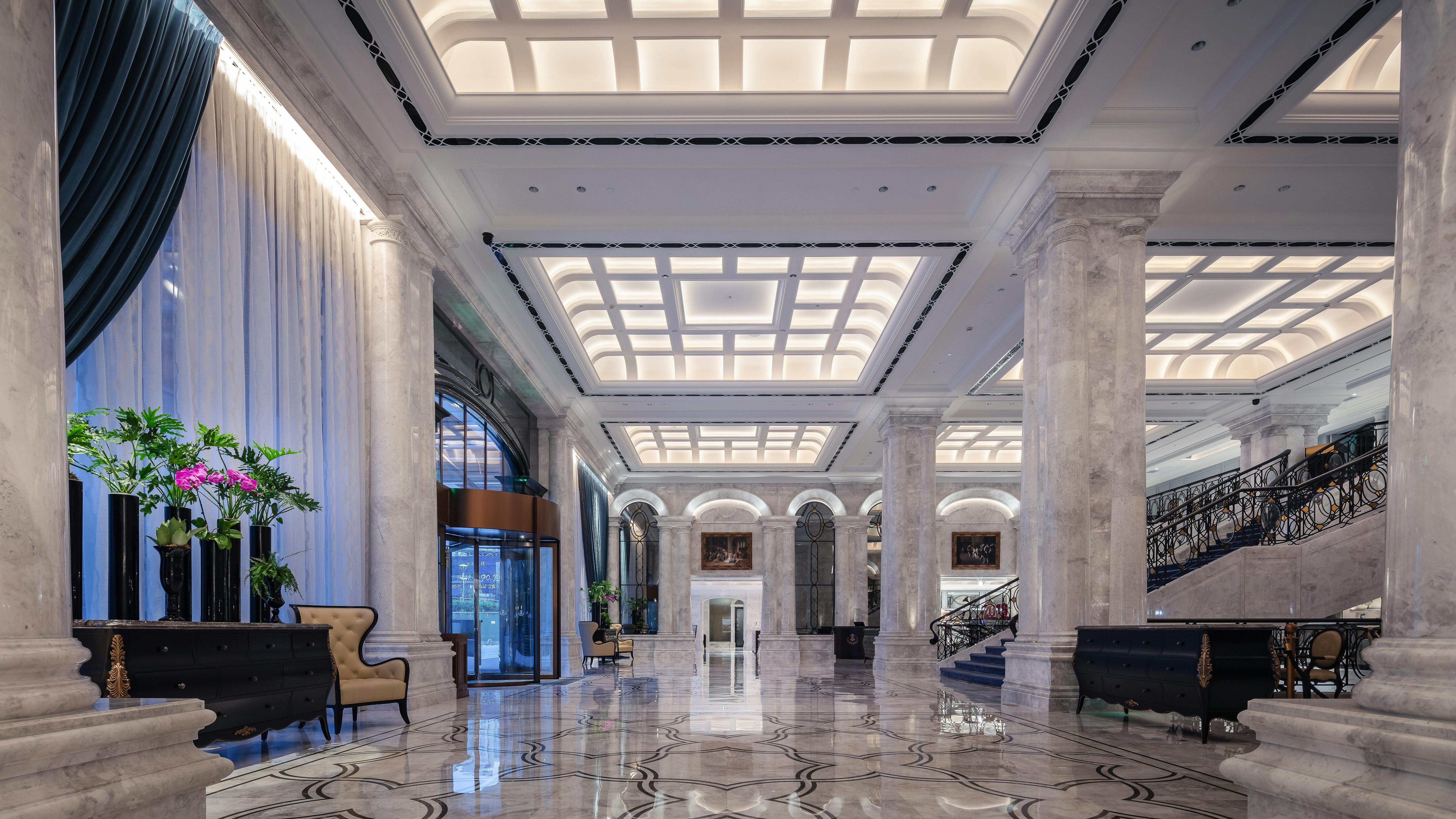
This Photo was taken by Hongyue Stone-Jon Lee.
Connecting spaces: foyer design within your home’s larger narrative
Your foyer shouldn’t exist in isolation but rather serve as the opening chapter of your home’s design story. The most successful luxury foyers establish design themes and material palettes that flow naturally into adjacent spaces while maintaining their own distinct identity.
Visual flow and material continuity
Material transitions between your foyer and connecting spaces require careful consideration. Flooring changes should feel intentional rather than abrupt, often accomplished through complementary materials or transitional borders that bridge different surface types.
When your foyer opens directly into your living room, dining room, or other primary spaces, color palettes and design styles should complement each other while allowing each area to maintain its distinct function and personality.
Sightlines and spatial relationships
Consider what visitors see from your foyer entrance. If your kitchen is visible from the front door, ensure it maintains the same level of organization and aesthetic appeal as your foyer. Similarly, if stairs are prominent features, staircase design should complement your foyer’s material palette and style direction.
Open floor plans require particular attention to these visual connections, as your foyer design influences perception of multiple spaces simultaneously. Furniture layout and spatial planning should create natural progression paths that guide visitors through your home while maintaining distinct zones for different activities.
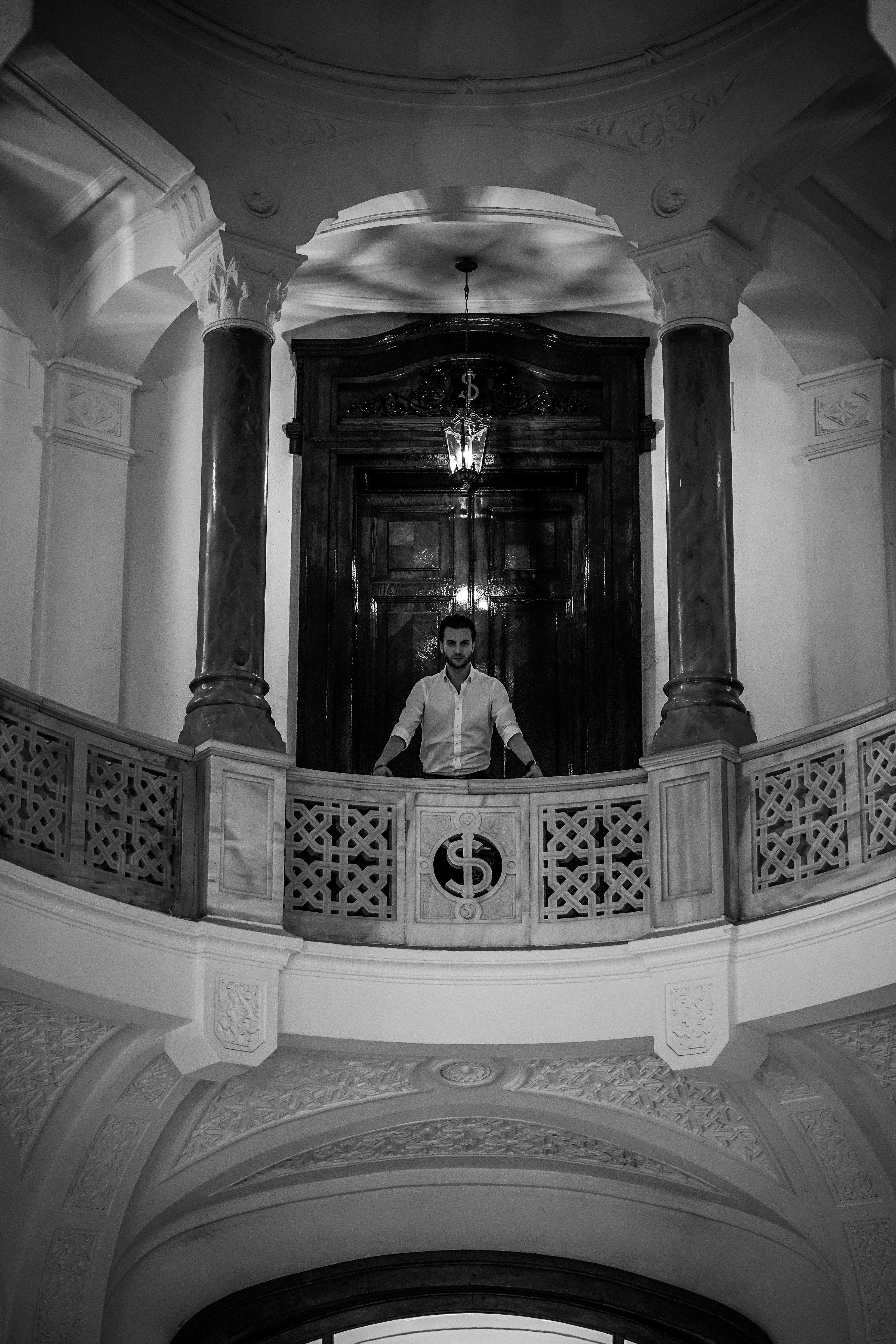
This Photo was taken by Fatih Güney.
Seasonal adaptability: evolving your entrance experience
The most dynamic luxury foyers incorporate elements that can evolve with seasons, holidays, and changing personal preferences. This adaptability keeps your entrance feeling fresh and current while maintaining its fundamental design integrity.
Flexible decorative elements
Design your foyer foundation with timeless elements that won’t require frequent updates, then incorporate changeable accessories that can reflect seasonal shifts or personal evolution. This might include artwork that can be rotated, accessories in adaptable color schemes, or floral arrangements that change with seasons.
Lighting systems with adjustable color temperature and intensity allow you to modify your foyer’s ambiance for different seasons, occasions, or times of day. Warmer lighting creates cozy winter atmospheres, while cooler temperatures feel refreshing during summer months.
Technology integration: smart solutions for modern luxury
Contemporary luxury foyers seamlessly integrate technology that enhances both security and convenience without compromising aesthetic appeal. The most successful installations remain invisible while providing substantial functionality improvements.
Security and access control
Smart doorbell systems with high-definition cameras, motion sensors, and two-way communication provide security benefits while maintaining sleek appearances. Integrate these systems with your home’s overall smart home technology for comprehensive control and monitoring capabilities.
Keyless entry systems eliminate the need for traditional keys while offering convenience features like temporary access codes for service providers or guests. Choose systems with backup power sources and manual override options to ensure reliable operation.
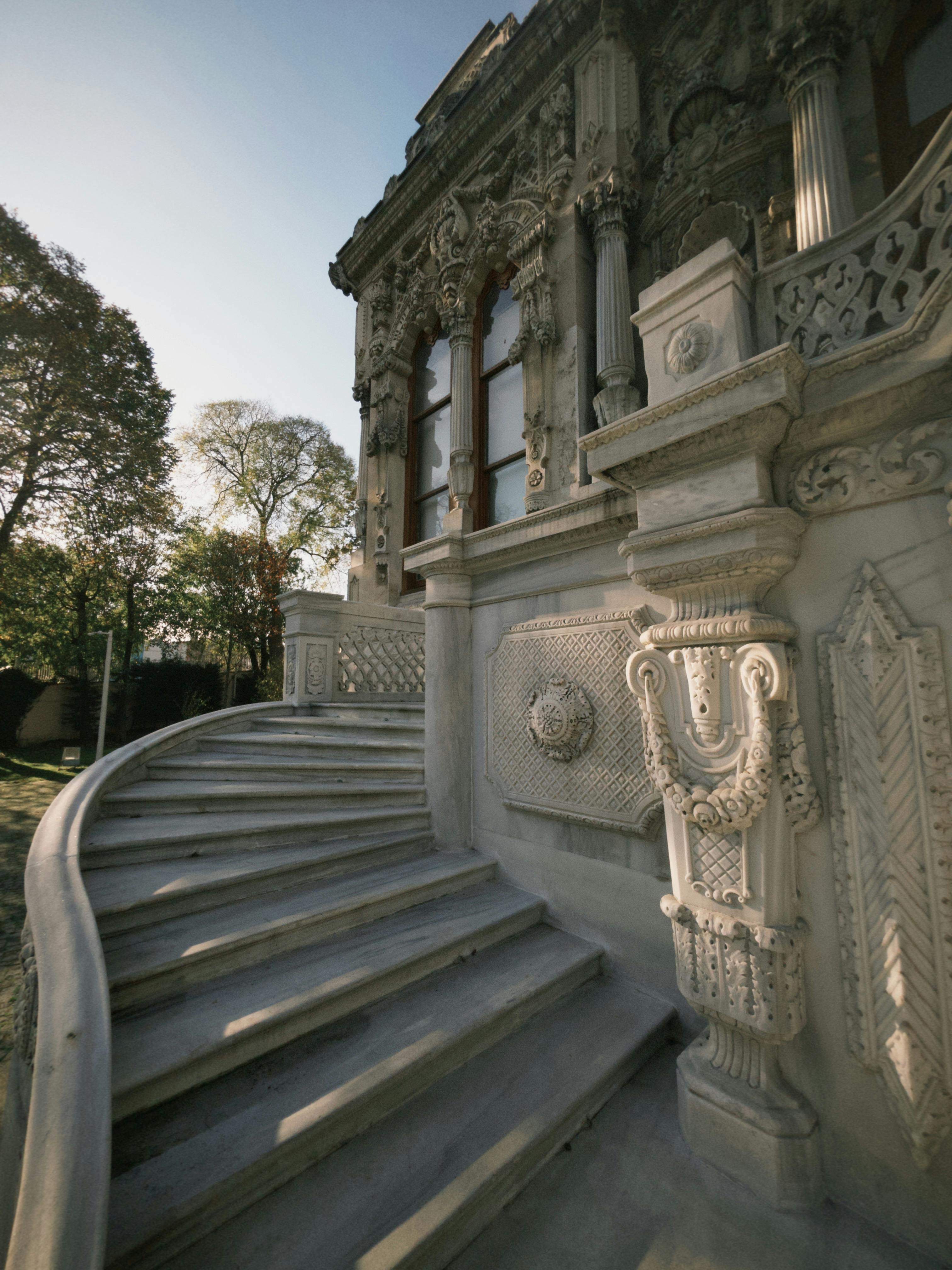
This Photo was taken by Ahmetcan Kılıç.
Climate and environmental control
Foyers can experience temperature fluctuations due to frequent door openings and often lack dedicated HVAC zones. Smart thermostats with room sensors ensure comfortable temperatures while managing energy efficiency. Humidity control becomes particularly important in areas with stone flooring or natural wood elements that can be affected by moisture changes.
Air purification systems with discrete installations improve indoor air quality, particularly valuable in foyers where outside air frequently enters. Choose systems that operate quietly and integrate seamlessly with your home’s existing HVAC infrastructure.
Budget considerations and investment strategies
Luxury foyer design represents a significant investment that should be approached strategically to maximize both immediate impact and long-term value. Understanding where to allocate your budget ensures optimal results regardless of your total investment level.
High-impact investments with lasting value
Architectural improvements like ceiling treatments, built-in storage, or structural modifications provide the greatest long-term value and should typically receive budget priority. These changes become integral parts of your home’s structure and contribute significantly to overall property value.
Quality flooring represents another high-value investment, as it forms the foundation for all other design decisions and experiences constant use. Natural stone or high-end engineered materials may cost more initially but provide decades of beautiful service with proper maintenance.
| Investment Category | Typical Budget Allocation | Long-term Value |
|---|---|---|
| Architectural/Structural | 35-40% | High |
| Flooring/Materials | 25-30% | High |
| Lighting/Electrical | 15-20% | Medium-High |
| Furniture/Fixtures | 10-15% | Medium |
| Accessories/Art | 5-10% | Personal |
Phased implementation strategies
Large-scale foyer renovations can be implemented in phases, allowing you to spread costs over time while living in your home during construction. Start with structural and architectural improvements, then progress through flooring, lighting, and finally furnishing and accessory phases.
This approach also allows you to live with initial changes and make informed decisions about subsequent phases based on how you actually use the space rather than relying solely on design projections.
Professional collaboration: working with design experts
Luxury foyer design benefits significantly from professional expertise, particularly for complex architectural modifications, lighting design, or custom millwork installations. Professional design services provide access to specialized knowledge, trade relationships, and design resources that may not be available to individual homeowners.
Selecting the right design team
Look for designers with specific experience in luxury residential projects and portfolios that demonstrate successful foyer designs. The best professionals understand how entrance spaces relate to overall home design and can balance aesthetic goals with practical requirements.
Establish clear communication about budget parameters, timeline expectations, and design preferences early in the relationship. The most successful projects result from collaborative relationships where professional expertise combines with homeowner input to create truly personalized results.

This Photo was taken by Andrea Piacquadio.
Managing the design and construction process
Luxury foyer renovations often involve multiple trades including electricians, flooring specialists, painters, and custom millwork installers. Professional project management ensures these different contractors coordinate effectively and maintain quality standards throughout the process.
Establish realistic timelines that account for custom material lead times, permit requirements, and potential unforeseen issues that may arise during construction. Quality luxury installations cannot be rushed, and adequate time allocation ensures superior results.
Maintenance and longevity: preserving your investment
Luxury foyer materials and finishes require specific maintenance approaches to preserve their appearance and value over time. Developing appropriate care routines from the beginning prevents costly repairs or replacements later.
Material-specific care requirements
Natural stone flooring requires regular sealing to prevent staining and etching from acidic substances. Marble surfaces are particularly vulnerable to acid damage from citrus, wine, or cleaning products, requiring immediate cleanup of spills and pH-neutral cleaning products.
Wood finishes benefit from controlled humidity levels and regular professional refinishing every 3-5 years in high-traffic areas like foyers. Use protective mats during harsh weather conditions to prevent moisture and salt damage.
Metal fixtures and hardware should be cleaned with appropriate products that won’t damage finishes. Brass and bronze pieces may require specialized cleaners to maintain their appearance without removing protective coatings.
Professional maintenance services
Consider professional maintenance contracts for expensive materials like natural stone flooring, custom millwork, or complex lighting installations. These services typically cost less than major repairs and help preserve warranty coverage on installed materials.
Annual professional assessments can identify potential issues before they become costly problems, particularly important for elements like custom lighting installations, built-in storage systems, or smart home technology components.
Frequently asked questions about luxury foyer design
What is the ideal size for a luxury foyer?
Luxury foyers should comprise 8-12% of your home’s total square footage, with minimum dimensions of 8×10 feet for adequate furniture placement and traffic flow. Larger homes may warrant proportionally bigger foyers, but functionality should always guide size decisions rather than pure square footage.
How do I choose between marble and other flooring options for my foyer?
Consider your lifestyle, maintenance preferences, and aesthetic goals. Marble provides unmatched luxury appeal but requires regular maintenance and careful use. High-quality porcelain that mimics natural stone offers similar visual impact with enhanced durability, while hardwood creates warmth but needs protection from moisture and scratches.
What lighting mistakes should I avoid in foyer design?
Avoid relying solely on overhead fixtures, which create harsh shadows and unflattering illumination. Skip fixtures that are too small for your space, as they look lost and fail to provide adequate light. Don’t forget dimmer controls, which allow you to adjust lighting for different occasions and times of day.
How can I make a small foyer feel more luxurious?
Focus on quality over quantity with fewer, higher-end materials and finishes. Use mirrors strategically to create the illusion of space, choose light colors that reflect available light, and select furniture pieces that provide storage without visual bulk. One statement lighting fixture often works better than multiple smaller pieces.
Should my foyer style match the rest of my home exactly?
Your foyer should complement your home’s overall aesthetic while potentially being slightly more formal or dramatic. It can preview design themes used throughout the house without replicating them exactly. The goal is visual harmony that creates natural flow between spaces.
What’s the best way to incorporate seasonal decorations in a luxury foyer?
Design a neutral foundation that accommodates changeable elements like floral arrangements, artwork, or accessories. Avoid permanent installations tied to specific seasons or holidays. Instead, focus on subtle changes in color temperature lighting, fresh flowers, or small decorative objects that can evolve with your preferences.
Your entrance to extraordinary living begins now
Creating a signature luxury foyer transcends simple decoration – it’s about crafting an experience that elevates every arrival and departure from your home. The investment you make in this critical space pays dividends not just in property value, but in the daily pleasure of living in a home that truly reflects your taste and lifestyle aspirations. Whether you’re starting with an existing space that needs transformation or designing from scratch, remember that the most successful luxury foyers balance stunning aesthetics with practical functionality, creating spaces that work beautifully for both everyday living and special occasions.
The design principles, material selections, and planning strategies we’ve explored provide the framework for creating your own grand entrance sanctuary. Yet the most important element remains your personal vision – what story do you want your foyer to tell? What experience do you want to create for yourself and your guests? These answers guide every design decision, from the grandest architectural modifications to the smallest accessory choices.
Your foyer represents the beginning of your home’s narrative, setting expectations and establishing the tone for everything that follows. When designed with intention, expertise, and attention to detail, it becomes more than just an entrance – it transforms into a daily reminder of the exceptional life you’ve created within your home’s walls. The journey to your signature luxury foyer begins with that first step across the threshold of possibility.