Signature Luxury Powder Room Design: Creating Bespoke Statement Sanctuaries for Sophisticated Impressions 2025
The powder room represents the ultimate test of a designer’s sophistication. This intimate space, often no larger than 20 square feet, must deliver maximum impact while accommodating the practical needs of both residents and guests. Yet most luxury homes treat these spaces as afterthoughts, missing the opportunity to create what I call a “statement sanctuary” – a space so compelling that guests remember it long after they leave.
The challenge isn’t just spatial limitations or plumbing constraints. It’s the misconception that smaller spaces require smaller ambitions. In 2025, discerning homeowners are discovering that the powder room offers unparalleled creative freedom precisely because of its intimate scale. Here, you can take design risks that might overwhelm larger spaces, creating a jewel-box environment that showcases your most refined aesthetic sensibilities.
The psychology behind powder room impact
Understanding why powder rooms carry disproportionate influence in home design requires examining guest psychology and spatial perception. Unlike grand foyer entrances where visitors are focused on navigation and orientation, the powder room offers a moment of solitude where guests truly absorb their surroundings.

This Photo was taken by La Miko.
Research from the American Society of Interior Designers indicates that guests spend an average of 3-5 minutes in powder rooms, creating what environmental psychologists term “concentrated exposure.” This focused attention period allows for deeper aesthetic appreciation than transitional spaces typically achieve. The psychological impact stems from the contrast between intimate scale and luxurious execution.
Consider the sensory sequence: guests enter expecting utility but encounter artistry. This pleasant surprise triggers what luxury hospitality experts call the “delight factor” – an emotional response that elevates the entire home experience. The powder room becomes a preview of your design sophistication, setting expectations for spaces they may never see.
Spatial intimacy as design advantage
The powder room’s compact dimensions create opportunities unavailable in larger spaces. Premium materials that might strain budgets in expansive rooms become feasible investments. A single dramatic wall covering can transform the entire environment. Strategic lighting can create theatrical effects impossible to achieve in multi-functional spaces.
This intimacy also allows for bold color choices and pattern combinations that would overwhelm larger living areas. Deep jewel tones, metallic finishes, and high-contrast combinations work beautifully within contained environments, creating visual drama without visual fatigue.
Essential elements of signature powder room design
Creating a bespoke powder room requires careful orchestration of multiple design elements, each contributing to a cohesive narrative. The key lies in understanding how these components interact within confined spaces to amplify rather than compete with each other.
This Photo was taken by Quan Tran.
Statement walls and surface treatments
The feature wall serves as the powder room’s focal point, demanding materials and treatments that photograph beautifully under various lighting conditions. Natural stone slabs, particularly book-matched marble or dramatic quartzite, create instant luxury while providing durability for high-traffic use.
Wallcoverings offer unlimited creative potential, from hand-painted silk panels to contemporary geometric patterns. Grasscloth and natural fiber coverings add texture and warmth, while metallic papers reflect light to expand perceived space. The key is selecting materials that complement rather than compete with your fixture selections.
| Material Category | Premium Options | Design Impact | Maintenance Level |
|---|---|---|---|
| Natural Stone | Calacatta Gold, Verde Guatemala | Timeless luxury | Moderate |
| Wallcoverings | Hand-painted silk, Venetian plaster | Artistic sophistication | Low to moderate |
| Architectural Details | Coffered ceilings, wainscoting | Classical elegance | Low |
| Artistic Installations | Commissioned murals, mosaic work | Unique personalization | Low |
Fixture selection and placement strategy
Powder room fixtures must balance sculptural beauty with practical function. Wall-mounted vanities maximize floor space while creating the illusion of expanded square footage. Vessel sinks offer artistic opportunities but require careful height calculations to ensure comfortable use by guests of varying statures.
The toilet selection deserves equal attention to vanity choices. Modern wall-hung models with concealed tanks create cleaner sightlines while simplifying floor maintenance. Smart toilet technologies, including heated seats and integrated bidets, elevate the guest experience without requiring extensive mechanical modifications.

This Photo was taken by KoolShooters.
Lighting strategies for maximum impact
Powder room lighting requires a layered approach that addresses both functional needs and atmospheric goals. The confined space intensifies lighting effects, making strategic placement and fixture selection critical to achieving the desired ambiance.
Ambient lighting foundations
Recessed ceiling fixtures provide general illumination but require careful positioning to avoid harsh shadows. Cove lighting behind floating vanities creates a sense of levitation while providing subtle ambient glow. Consider dimmable LED systems that allow guests to adjust brightness levels according to comfort preferences.
Natural light integration, when available, should be maximized through strategic mirror placement and light-colored surface selections. Frosted or textured glass maintains privacy while allowing daylight penetration. Where windows aren’t feasible, consider light tubes or artificial skylights for psychological brightness.
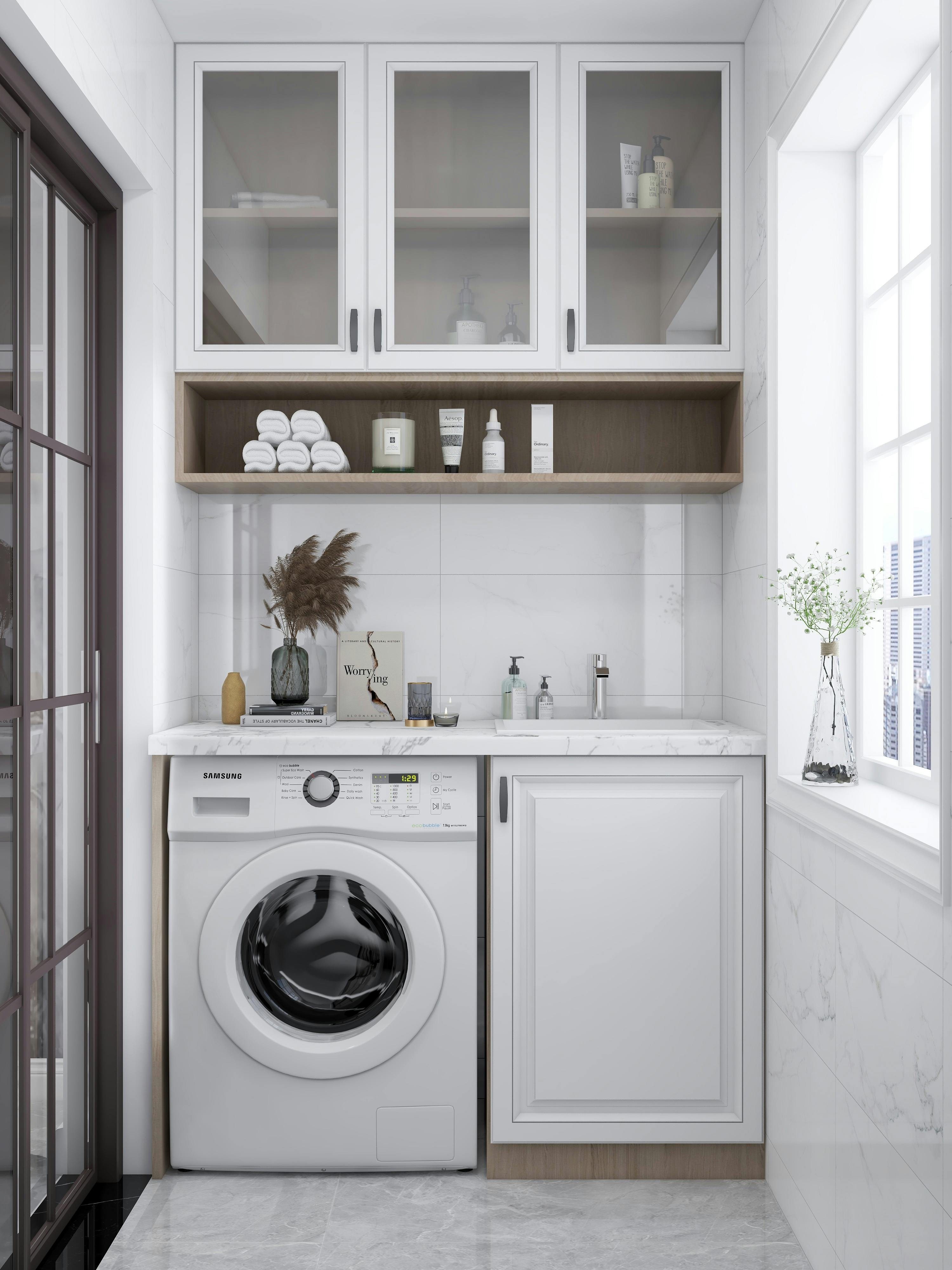
This Photo was taken by Nha Chill.
Task and accent lighting integration
Vanity lighting must eliminate shadows while flattering skin tones. Side-mounted sconces provide the most even illumination for mirror use, while statement pendant lights add vertical interest in rooms with sufficient ceiling height. LED strip lighting behind mirrors creates a floating effect while providing excellent task illumination.
Accent lighting highlights architectural features and art installations. Picture lights, toe-kick illumination, and hidden LED strips can transform ordinary surfaces into dramatic focal points. The goal is creating visual layers that reveal themselves gradually as guests’ eyes adjust to the space.
Similar lighting principles apply to luxury bathroom designs, though powder rooms allow for more dramatic contrasts due to their limited functional requirements.
Material selection and sustainability considerations
Luxury powder rooms demand materials that photograph beautifully, age gracefully, and withstand frequent use. The challenge lies in balancing aesthetic aspirations with environmental responsibility and long-term performance requirements.

This Photo was taken by Max Vakhtbovych.
Sustainable luxury material options
Reclaimed wood elements add character while supporting environmental goals. Salvaged barn wood, aged oak beams, and antique chestnut create warmth and texture impossible to achieve with new materials. These elements work particularly well as accent walls or vanity bases, providing contrast to polished surfaces.
Recycled glass tiles and countertops offer sustainable beauty with unlimited color options. These materials often contain unique characteristics – subtle color variations, embedded elements, or interesting textures – that create visual interest while supporting environmental responsibility.
Natural cork and bamboo flooring provide comfort underfoot while maintaining moisture resistance essential in powder room environments. These renewable materials accept stains and finishes beautifully, allowing customization to match any color palette or design aesthetic.
Investment-grade material strategies
Certain powder room materials justify premium investment due to their longevity and timeless appeal. Natural stone countertops and flooring, particularly marble and granite varieties, improve with age when properly maintained. These materials also add measurable value to home appraisals.
Solid wood vanities, especially those crafted from hardwoods like walnut or cherry, develop beautiful patina over time. Custom millwork allows perfect dimensional fit while creating unique storage solutions impossible to achieve with mass-produced cabinetry.
According to the National Association of Home Builders, powder room renovations using premium materials retain 85-90% of their investment value, making them among the most financially sound home improvements available.
Color psychology and pattern integration
Powder room color strategies differ significantly from other residential spaces due to the brief but focused exposure time guests experience. This environment allows for bolder choices that might prove overwhelming in spaces where occupants spend extended periods.

This Photo was taken by Max Vakhtbovych.
Color temperature and mood creation
Warm color palettes create welcoming environments that encourage relaxation. Rich burgundies, deep forest greens, and golden yellows establish cozy intimacy while maintaining sophisticated appeal. These colors photograph beautifully under both natural and artificial lighting conditions.
Cool color schemes offer contemporary elegance with calming psychological effects. Navy blues, charcoal grays, and sage greens create spa-like tranquility while providing neutral backgrounds for metallic accents and artistic elements.
Monochromatic schemes, particularly those utilizing varying shades of single color families, create sophisticated unity while allowing texture and pattern to provide visual interest. This approach works especially well when coordinating with adjoining bedroom suites or other private spaces.
Pattern mixing and scale considerations
Powder rooms accommodate pattern combinations that would overwhelm larger spaces. The key lies in varying scales while maintaining color harmony. Large-scale patterns work well on feature walls, while smaller patterns succeed in fabric elements or decorative accessories.
Geometric patterns create contemporary energy, while organic patterns offer timeless appeal. Mixing these pattern families requires careful attention to color coordination and visual balance. Generally, limit bold patterns to two varieties while using solid colors and subtle textures to prevent visual chaos.
Smart technology integration for modern convenience
Contemporary powder rooms benefit from thoughtful technology integration that enhances guest experience without overwhelming the intimate environment. The goal is invisible convenience rather than obvious gadgetry.
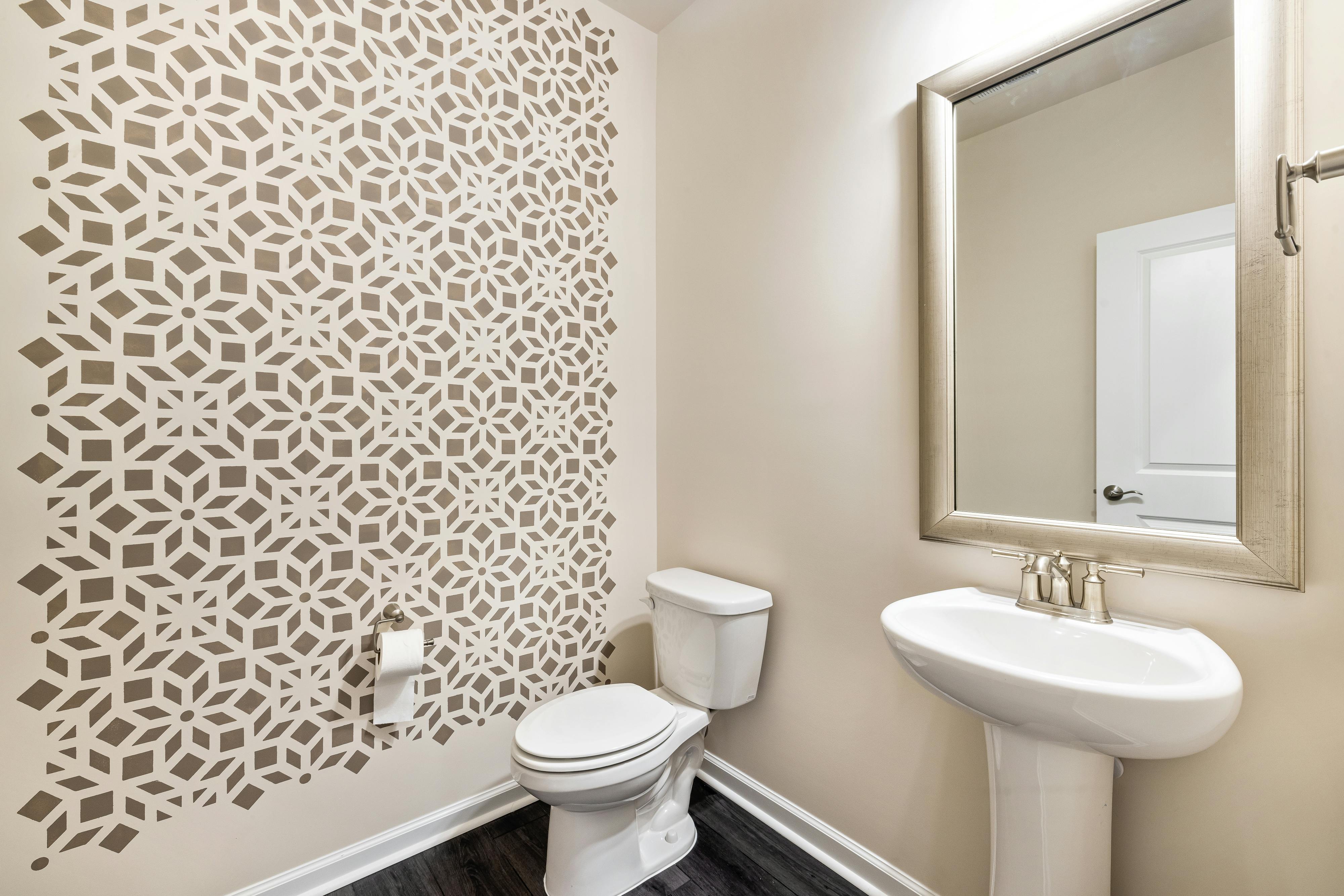
This Photo was taken by Curtis Adams.
Automated systems and controls
Motion-activated lighting provides immediate illumination while conserving energy during unoccupied periods. Advanced systems can be programmed for different lighting scenes – bright task lighting during daytime use, subtle ambient lighting during evening hours.
Automated ventilation systems maintain air quality while operating quietly enough to avoid disrupting the peaceful environment. Smart humidity sensors trigger ventilation only when needed, reducing energy consumption while preventing moisture-related issues.
Integrated audio systems allow background music or nature sounds without visible speakers. Bluetooth connectivity enables guests to stream personal music preferences from their devices, creating personalized comfort during longer visits.
These smart home technology principles can be adapted throughout luxury residences for cohesive automation experiences.
Hygiene and maintenance technologies
Touchless faucets and soap dispensers reduce bacterial transmission while maintaining elegant aesthetics. Modern sensor technology has improved significantly, providing reliable operation without the maintenance issues that plagued earlier systems.
Self-cleaning toilet technologies, including UV sterilization and electrolyzed water cleaning, maintain hygiene standards between uses. These features are particularly valuable in guest powder rooms where cleaning schedules may be less frequent than primary bathrooms.
Air purification systems, particularly those using UV-C technology or photocatalytic oxidation, maintain fresh air quality without adding chemical fragrances that might conflict with guests’ sensitivities or preferences.
Storage solutions that maintain aesthetic integrity
Powder room storage challenges require creative solutions that maintain clean sightlines while providing necessary functionality. The goal is accommodating practical needs without compromising the carefully curated aesthetic experience.

This Photo was taken by Max Vakhtbovych.
Hidden storage strategies
Recessed medicine cabinets with mirror fronts provide storage without consuming valuable wall space. Modern versions feature LED lighting, electrical outlets, and adjustable shelving while maintaining flush installation that preserves clean wall lines.
Vanity toe-kick drawers utilize otherwise wasted space for storing cleaning supplies, extra toiletries, or maintenance equipment. These shallow drawers are perfect for items needed occasionally but not suitable for visible storage.
False drawer fronts can conceal electrical panels, water shut-off valves, or other mechanical elements that require access but detract from aesthetic goals. Professional installation ensures these elements remain functional while invisible during normal use.
Decorative storage integration
Open shelving, when carefully styled, provides storage while contributing to the overall design narrative. Floating shelves display art objects, premium toiletries, or decorative elements while maintaining accessibility for practical items.
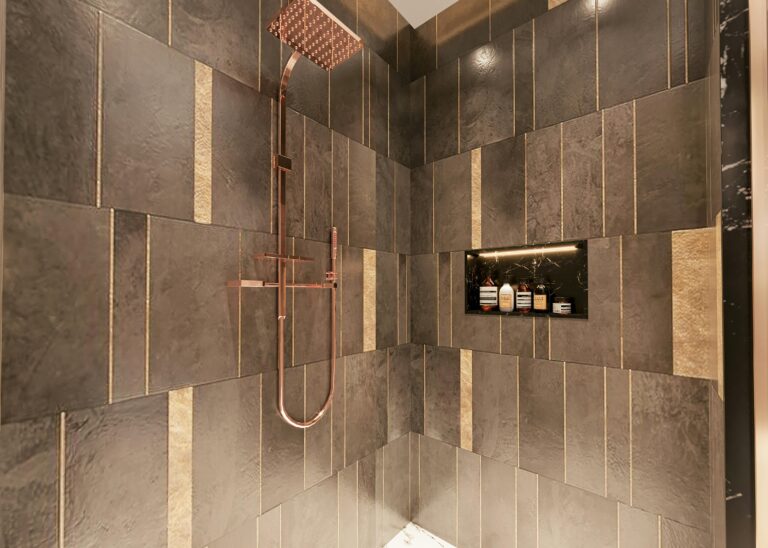
Built-in niches create architectural interest while providing designated spaces for necessities. These recessed areas work particularly well in shower areas or beside vanities where they don’t interfere with movement patterns.
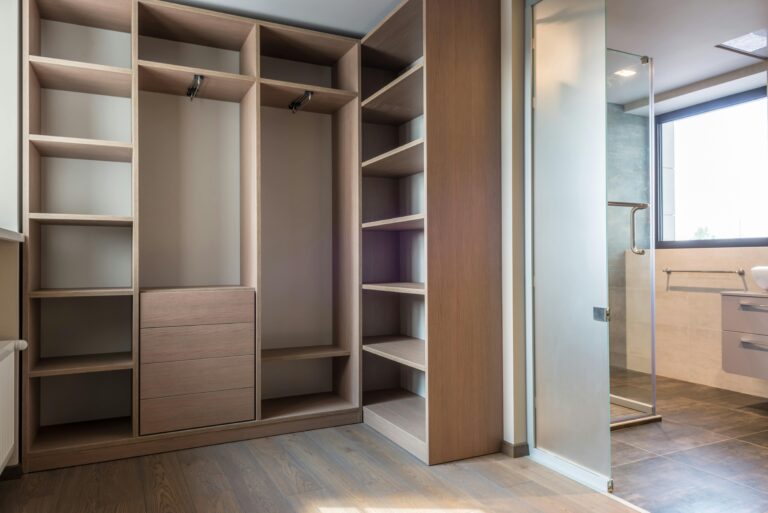
Similar storage principles apply throughout luxury homes, as demonstrated in walk-in closet designs where functionality and aesthetics must coexist harmoniously.
Art and accessories that complete the narrative
Powder room accessories require careful curation to avoid cluttering the intimate space while providing personality and finishing touches that elevate the overall design narrative.
This Photo was taken by Kate Filatova.
Artwork selection and placement
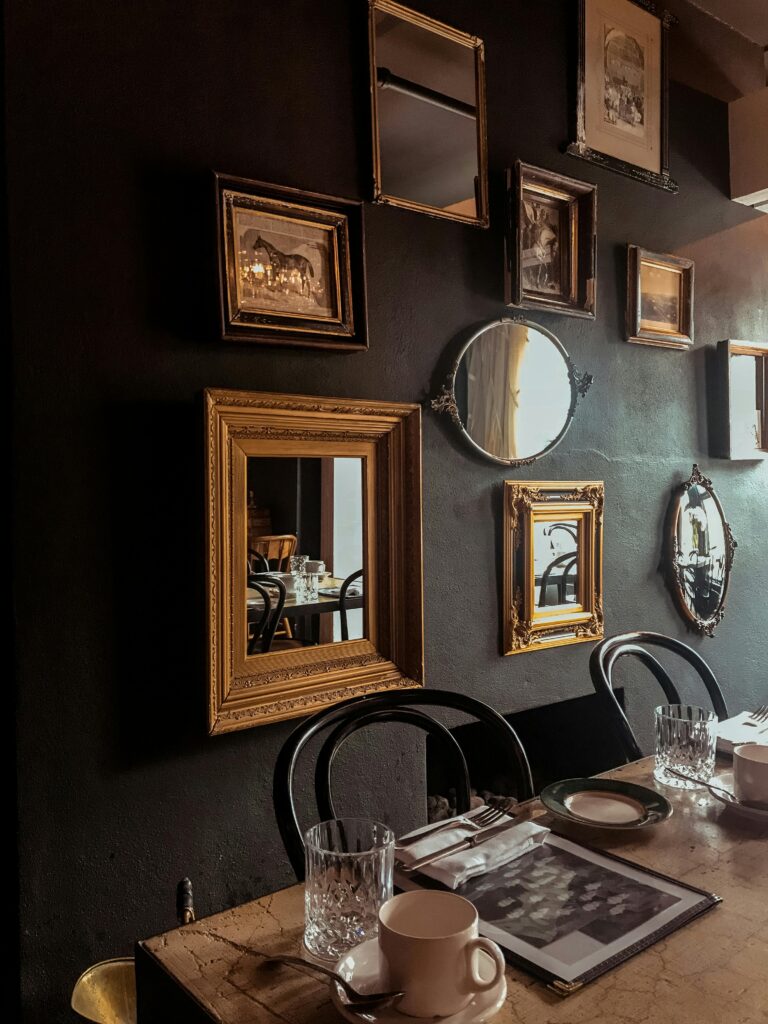
Powder room art should be conversation-worthy without being controversial. Original pieces, limited edition prints, or photography create focal points that reward close examination. The intimate viewing distance allows for detailed works that might be lost in larger spaces.
Moisture considerations require appropriate framing and materials. Canvas prints, metal artwork, or properly sealed pieces withstand humidity fluctuations better than traditional paper-based prints. Professional framing with moisture-resistant materials protects investments while maintaining aesthetic appeal.
Scale relationships are critical in small spaces. A single large piece often works better than multiple small pieces, which can create visual chaos. Consider the viewing angles – art should be positioned for comfortable appreciation while seated or standing.
Functional accessories with style
Towel presentation deserves as much attention as any other design element. High-quality hand towels in coordinating colors should be changed frequently to maintain fresh appearances. Consider providing disposable guest towels for formal entertaining.
Soap and lotion dispensers should complement fixture finishes while providing reliable function. Refillable dispensers allow premium product presentation while reducing waste from individual packaging.
Fresh flowers or plants add life and fragrance when appropriate. Low-light plants like snake plants or ZZ plants thrive in windowless powder rooms while improving air quality. Fresh flower arrangements require regular maintenance but provide unmatched elegance for special occasions.
Budget allocation strategies for maximum impact
Effective powder room budgeting requires strategic allocation to achieve luxury results while managing overall project costs. Understanding which elements provide the greatest visual and functional impact guides smart spending decisions.
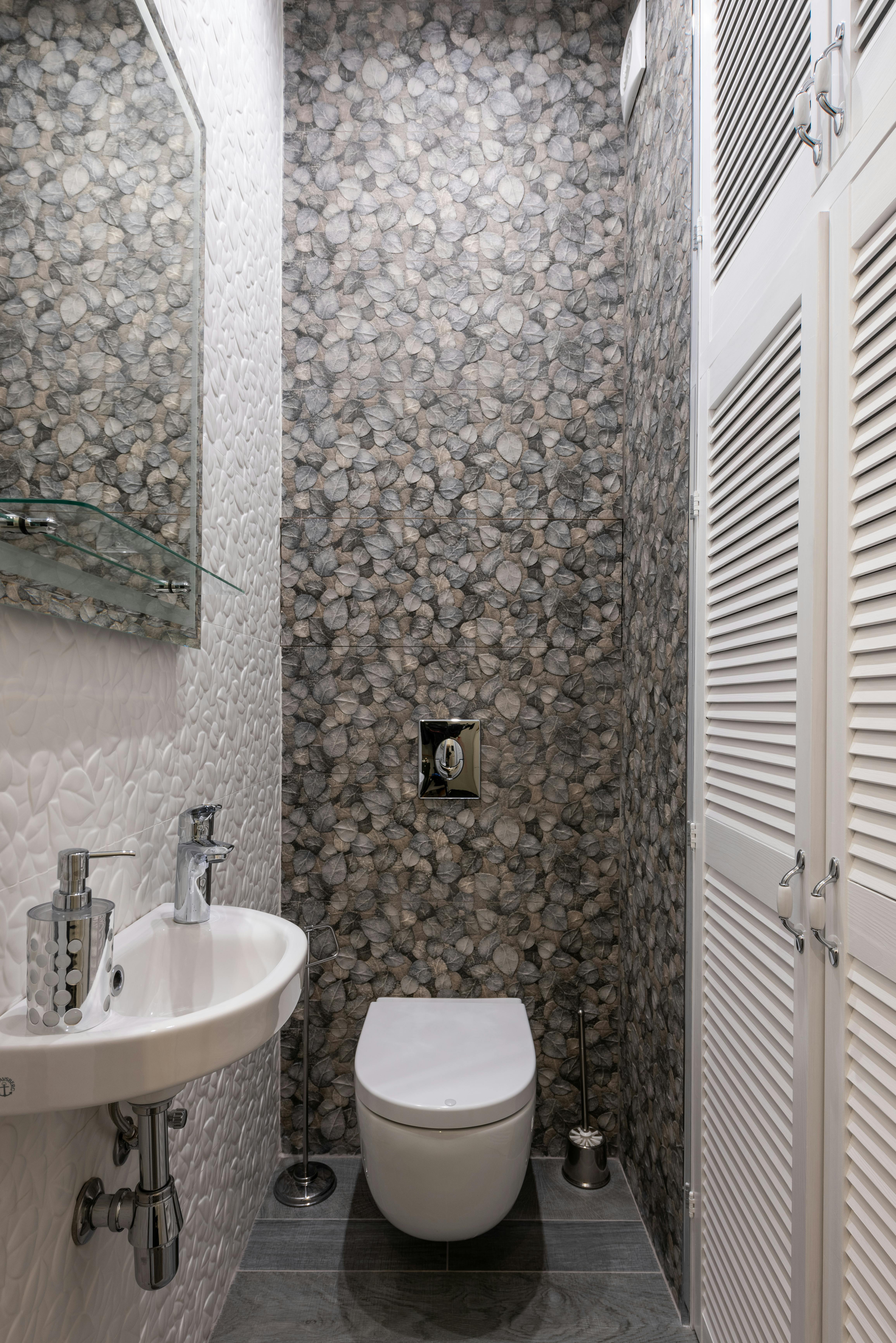
This Photo was taken by Max Vakhtbovych.
High-impact investment priorities
Lighting systems provide the greatest return on investment in powder room renovations. Quality fixtures and proper installation create dramatic transformations that enhance every other design element. Professional lighting design ensures optimal placement and control systems for maximum versatility.
Vanity and mirror selections form the room’s functional and visual centerpiece. Investing in custom millwork or premium manufactured pieces ensures proper proportions and long-term durability. These elements are used most frequently and contribute significantly to the overall aesthetic impression.
Flooring materials experience constant use and should prioritize durability without sacrificing beauty. Natural stone, premium tile, or engineered hardwood justify higher initial costs through longevity and maintenance advantages.
| Budget Category | Recommended Allocation | Priority Level | Impact on Design |
|---|---|---|---|
| Lighting Systems | 25-30% | High | Transforms all elements |
| Fixtures & Vanity | 20-25% | High | Functional centerpiece |
| Flooring Materials | 15-20% | Medium | Foundation aesthetics |
| Wall Treatments | 15-20% | Medium | Visual drama |
| Accessories & Art | 10-15% | Low | Personality expression |
Cost-effective luxury strategies
Wallcoverings offer significant visual impact at relatively modest cost compared to architectural modifications. Premium wallpapers can transform spaces as dramatically as expensive stone installations while allowing future updates without major renovation.
DIY elements, when carefully selected, can reduce costs while adding personal touches. Hand-painted accent walls, custom artwork, or refinished vintage accessories contribute unique character while managing budget constraints.
Phased renovation approaches allow budget spreading over time while maintaining progress toward design goals. Complete plumbing and electrical work initially, then add finish materials and accessories as budget permits.
These budgeting strategies align with broader interior design trends for 2025 that emphasize strategic investment over wholesale replacement.
Maintenance and longevity considerations
Luxury powder rooms require maintenance strategies that preserve beauty while ensuring reliable function. Understanding material characteristics and establishing proper care routines protects both aesthetic investments and practical performance.
Material-specific care protocols
Natural stone surfaces require regular sealing and pH-neutral cleaning products to prevent etching and staining. Marble and limestone are particularly susceptible to acid damage from common household cleaners. Establishing proper care routines from installation prevents expensive restoration needs.
Wallcoverings need gentle maintenance approaches that preserve texture and color. Vacuum cleaning with brush attachments removes dust without damaging delicate surfaces. Spot cleaning requires immediate attention to prevent permanent staining.
Plumbing fixtures benefit from regular maintenance to prevent mineral buildup and ensure smooth operation. Quality fixtures justify professional servicing that maintains warranty coverage while preventing premature replacement needs.
Long-term value preservation
Documentation of material specifications, warranty information, and maintenance requirements preserves long-term value. This information proves invaluable for future renovations, repairs, or home sales.
Regular professional maintenance, particularly for plumbing and electrical systems, prevents minor issues from becoming major problems. Annual inspections identify potential concerns while they remain manageable and affordable to address.
These maintenance principles extend throughout luxury homes, as discussed in our comprehensive guide to luxury design services that includes ongoing maintenance support.
Frequently asked questions
What is the ideal size for a luxury powder room?
Luxury powder rooms typically range from 20-40 square feet, with 24-30 square feet providing optimal balance between intimacy and functionality. Spaces smaller than 20 square feet feel cramped, while rooms exceeding 40 square feet lose the cozy atmosphere that makes powder rooms special.
How much should I budget for a high-end powder room renovation?
Premium powder room renovations typically range from $15,000-$35,000, depending on fixture selections, structural modifications, and finish quality. Luxury projects involving custom millwork, premium stone, or significant plumbing relocations may exceed $50,000.
Can powder rooms include windows while maintaining privacy?
Yes, powder rooms benefit significantly from natural light. Privacy solutions include frosted glass, decorative window films, or strategic landscaping. Clerestory windows or skylights provide light without privacy concerns while creating dramatic lighting effects.
What lighting temperature works best in powder rooms?
Warm white lighting (2700K-3000K) creates welcoming ambiance while providing accurate color rendering for skin tones. Avoid cool white lighting (4000K+) which can feel sterile and unflattering in intimate settings.
Should powder room design match the rest of the home’s style?
Powder rooms can be more adventurous than other spaces while maintaining architectural harmony. Use common elements like hardware finishes or color families to create connection while allowing unique personality expression through patterns, colors, or artistic elements.
How do I ensure proper ventilation in windowless powder rooms?
Install exhaust fans rated for the room’s cubic footage with quiet operation (less than 1.5 sones). Consider continuous-run fans with humidity sensors for optimal air quality. Proper ventilation prevents moisture issues that could damage premium finishes.
Your powder room transformation awaits
The journey from ordinary powder room to signature sanctuary requires vision, strategic planning, and meticulous execution. Yet the transformation potential within these intimate spaces exceeds almost any other home renovation project in terms of impact per square foot invested.
Your powder room speaks before you do. It establishes expectations, demonstrates priorities, and creates lasting impressions that influence how guests perceive your entire home. This responsibility demands treating these spaces not as utilitarian afterthoughts, but as opportunities to showcase your most refined aesthetic sensibilities.
The principles outlined here – from strategic lighting and premium materials to thoughtful technology integration and artistic curation – work together to create environments that surprise and delight. Whether you’re embarking on new construction or renovating existing spaces, remember that powder room design allows creative risks and bold statements impossible in larger, multi-functional areas.
Consider this your invitation to think differently about small spaces. Challenge the assumption that intimate rooms require modest ambitions. Instead, embrace the powder room as your design laboratory – a place where experimentation meets elegance, where every detail contributes to an unforgettable experience.
The most successful luxury powder rooms tell stories. What story will yours tell about your commitment to exceptional living and your appreciation for design excellence? The answer lies in your willingness to treat these spaces with the attention and investment they deserve.