Technical Specifications for Majlis Furniture Layouts: Functional Zoning and Dimensional Standards
Designing formal reception environments requires a precise integration of ergonomic data, load-bearing metrics, and spatial efficiency. Unlike standard residential living rooms, a majlis functions as a high-density reception hall where luxury classic furniture must serve both aesthetic and rigorous utilitarian roles. This analysis details the technical parameters for layout configuration, structural integrity, and material performance required for contract-grade majlis projects.
Spatial Planning and Peripheral Layout Logic
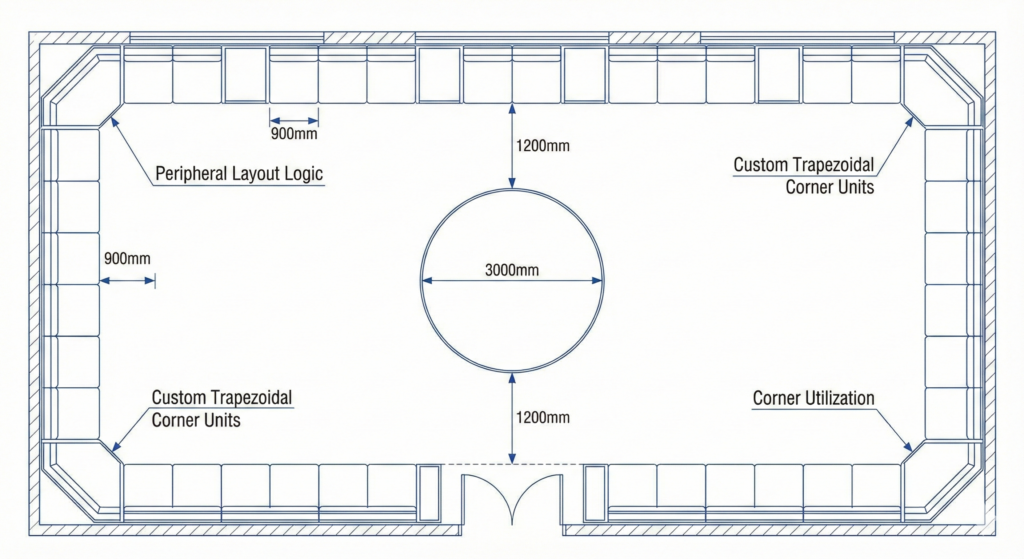
The primary architectural constraint in majlis design is the necessity for peripheral seating arrangements that maximize line-of-sight across the room. While Western layouts often utilize floating furniture islands, the majlis typology relies on wall-aligned continuous seating to facilitate large-scale gatherings.
Linear Footage and Corner Utilization
Efficient floor plans prioritize the continuous run of seating modules. Standard commercial layouts allocate 750mm to 850mm of linear width per person for formal seating. In majlis configurations using classic frames, this allowance often increases to 900mm to accommodate decorative armrests and carved detailing without compromising user personal space.
- Corner Modules: Dead space in corners must be mitigated using custom trapezoidal corner units or oversized square connecting tables (minimum 900x900mm) to maintain structural continuity.
- Access Corridors: A minimum clearance of 1200mm is required between the central coffee tables and the edge of the seating furniture to allow service staff circulation without disrupting seated guests.
Structural Ergonomics and Frame Physics
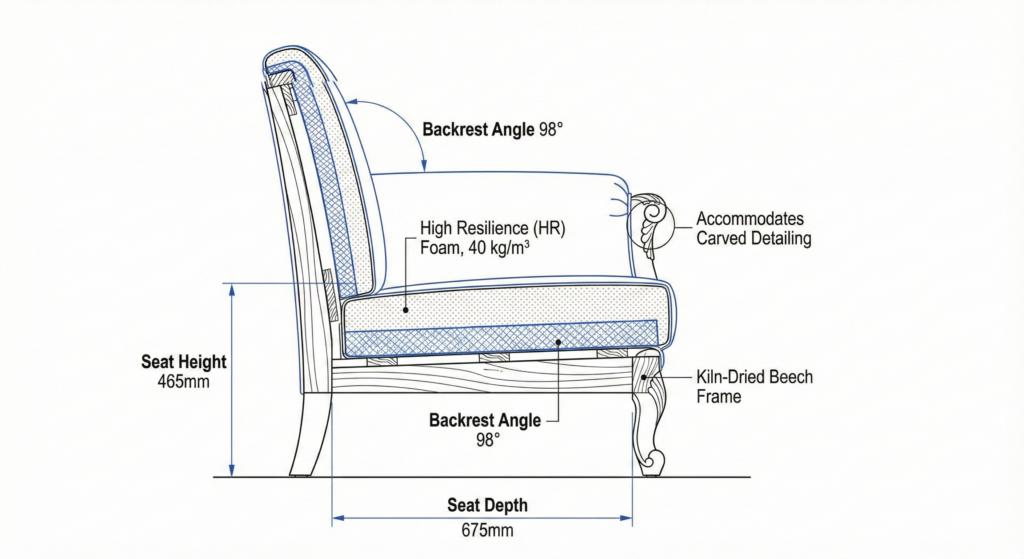
Classic furniture in these environments is subject to extended static loading. Manufacturers like Modenese Furniture utilize solid beech or mahogany frames specifically kilned to 10-12% moisture content to prevent warping under the variable humidity conditions often found in the GCC region.
| Dimensional Parameter | Standard Western Sofa | Formal Majlis Specification | Technical Rationale |
|---|---|---|---|
| Seat Height | 400mm – 430mm | 450mm – 480mm | Facilitates easier ingress/egress for formal attire; supports upright posture suitable for conversation rather than lounging. |
| Seat Depth | 550mm – 600mm | 600mm – 750mm | Accommodates additional lumbar cushions often used for adjustable comfort during extended duration events. |
| Backrest Angle | 105° – 115° (Reclined) | 95° – 100° (Upright) | Maintains formal visual hierarchy and alertness; alignment with wall surfaces. |
| Foam Density | 28 – 32 kg/m³ | 35 – 45 kg/m³ (HR) | High Resilience (HR) foam prevents deformation (sagging) under constant use. |
Upholstery Performance and Textile Engineering
The visual dominance of upholstery in a majlis demands materials that meet rigorous abrasion resistance standards. For high-traffic majlis applications, specifying italian fabrics with a Martindale rating exceeding 40,000 cycles is critical to prevent pile crushing and seam fatigue.
Fabric Tension and Pattern Alignment
Classic furniture involves complex tufting (capitonné) and pleating. The tensile strength of the fabric must accommodate the high tension required for buttoning without tearing. Damask and jacquard weaves are preferred not only for aesthetics but for their dimensional stability compared to looser weaves like chenille.
Fire safety compliance is non-negotiable in contract spaces. Upholstery stacks must meet NFPA 260 or ISO 8191 standards for cigarette ignition resistance. This often requires inter-liners or specifically treated textiles.
Integration of Surface Elements
The interaction between seating and hard surfaces dictates the functionality of the room. Central tables in large majlis rooms often span 2000mm to 3000mm in diameter, requiring reinforced sub-flooring or strategic rug placement to distribute weight.
Side Table Ratios
Unlike Western setups where side tables are optional, majlis protocols dictate a frequency of one side table for every two seating positions.
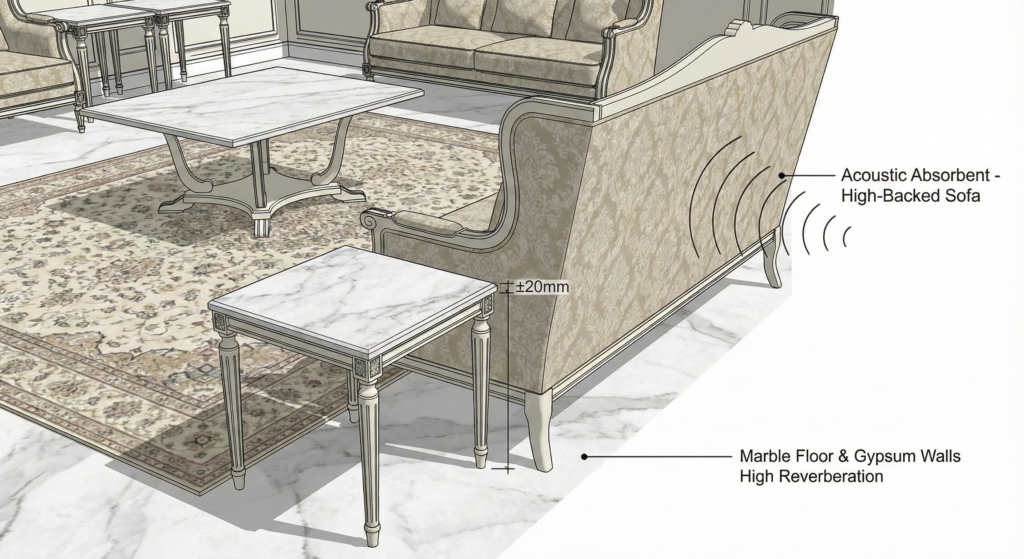
- Height Delta: Table surfaces should align within ±20mm of the sofa arm height (approx. 600mm-650mm) to allow ergonomic reach without twisting the spine.
- Material Density: Marble tops, common in Modenese Furniture collections, add significant dead load. A 60cm x 60cm marble top (20mm thickness) adds approximately 20kg, necessitating reinforced joinery in the wooden base legs.
Acoustic Dampening and Volume Control
Majlis spaces are characterized by hard surfaces—marble floors and gypsum wall moldings—which create high reverberation times. The furniture acts as the primary acoustic absorbent. High-backed classic sofas function as sound baffles. To optimize speech intelligibility index (SII) values in large halls, furniture density should cover at least 35% of the floor area. Referencing Whole Building Design Guide (WBDG) standards for acoustic comfort helps in calculating the necessary absorption coefficients for upholstery materials.